




SHORT ANSWER: No, it's not safe to lean a ladder against a gutter. Make sure you lean your ladder against a strong resting point that's sturdy enough to support it.
SHORT ANSWER: No, it's not safe to lean a ladder against a gutter. Make sure you lean your ladder against a strong resting point that's sturdy enough to support it.
If you need to change a light bulb or get something down from a high shelf, you might be tempted to just grab the nearest chair and stand on top of it in order to reach the required height.
But chairs and stools are designed to be sat on, not stood on. Even a sturdy-looking chair may not be stable enough to serve as a safe height access solution.
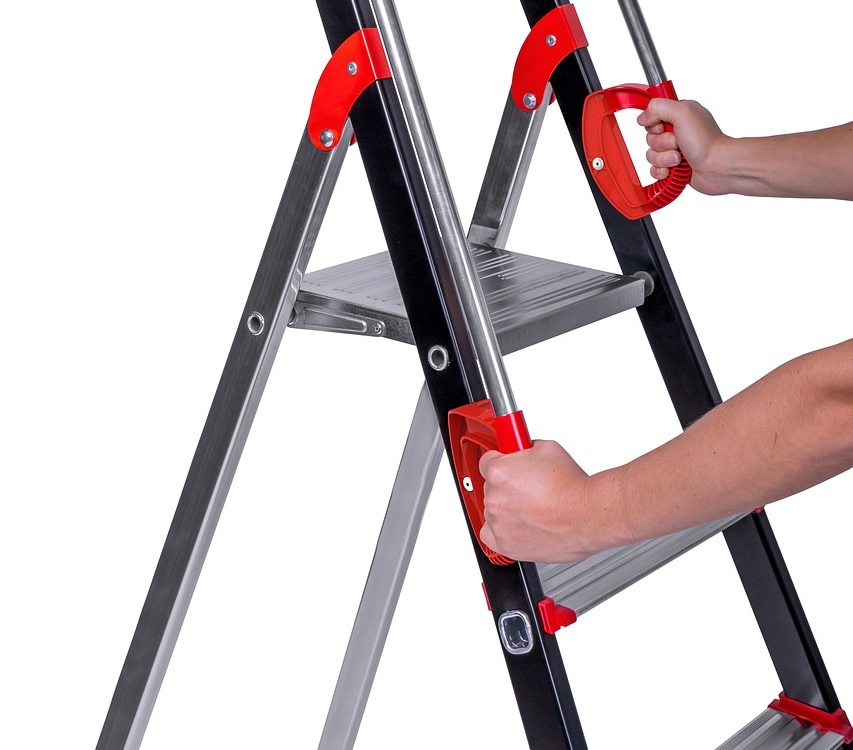
Unless you have a fear of heights, there's no reason to be afraid of using a ladder. A ladder isn't dangerous as long as it's in good condition and you use it safely.
Here's what you can do to minimise risk when using a ladder...
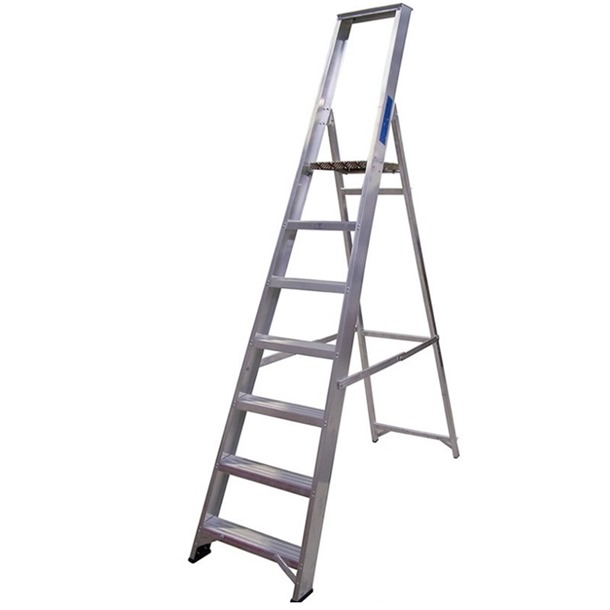
Self-supporting step ladders are generally safe and easy to use, but there are certain precautions you should take to minimise your risk of falling and injuring yourself.
For example, it may not be safe to stand on your step ladder's topmost treads. The exact rules depend on what sort of ladder you're using - read on for details.
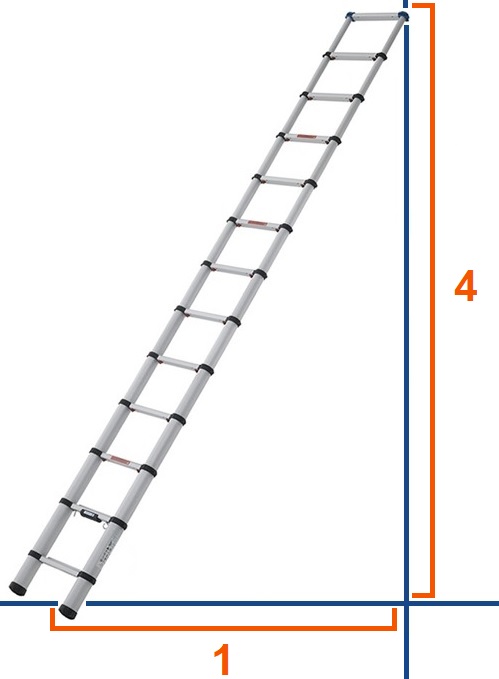
The HSE (Health and Safety Executive) recommends leaning your ladder at a 75-degree angle so that the base is positioned at one-quarter of the working length of the ladder. This is commonly referred to as the ‘1 in 4’ rule.